
Building an owned ecommerce presence for a retail business that needs room to change with inventory.
Trendz Depot LLC is a retail business associated with Buffalo, Wyoming and operates the TrendzDepot.com web property. Ecommerce sites have a different requirement from service-business websites: inventory, merchandising and promotions can change continuously, so the website must function as an adaptable storefront that can change with inventory and promotions. This case study focuses on the delivered commerce presence and the architecture needed to keep the brand’s primary digital property under its own domain.
Trendz Depot LLC
Sector: Retail ecommerce
Market: United States
Primary search theme: ecommerce website development for small business
Live website: https://trendzdepot.com
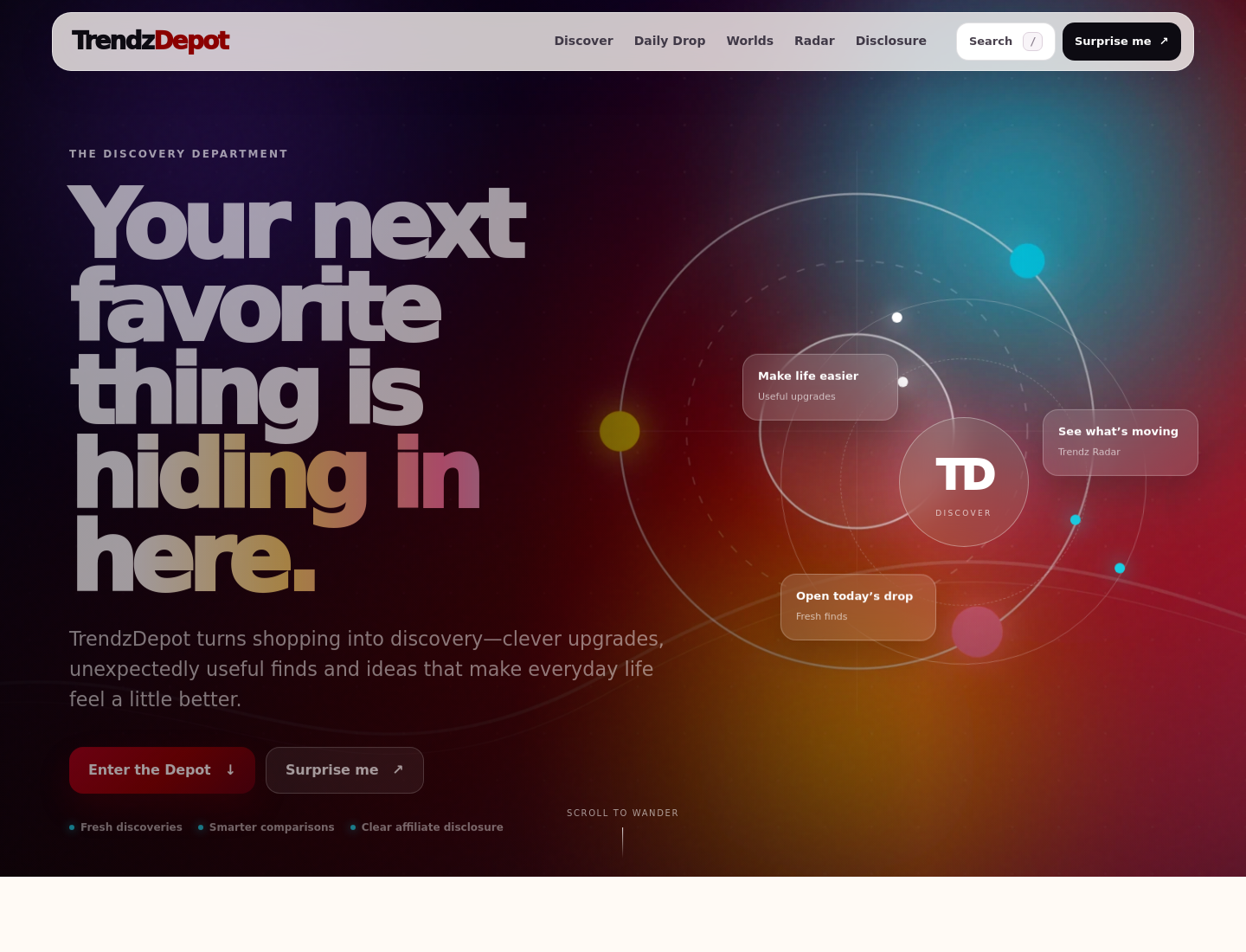
The ecommerce requirement is an operating storefront, not a static presentation
A retail website has to support a catalogue that can change. Products can be added, removed, repriced or reorganized; promotions can be temporary; and the homepage may need to feature different merchandise over time. That makes ecommerce development fundamentally different from building a five-page informational site.
Trendz Depot’s web property was approached as an owned commerce destination under TrendzDepot.com. The domain creates a stable address that can be used in search, advertising, email, packaging and future customer-retention activity even as the inventory changes behind it.
Retail inventory changes over time, so the case study focuses on the commerce property, brand destination and storefront structure.
Why small retail businesses need an owned domain
Marketplace profiles and social storefronts can help with discovery, but they are rented environments. Rules, fees, visibility and account access are controlled by the platform. An owned domain gives a retail company a location where brand presentation, product organization and customer journeys can be managed directly.
For Trendz Depot, that means the website can act as the canonical commercial destination even when customers discover the business elsewhere. Links from future campaigns, search results, product content or customer communications can point back to the same owned property.
From a commercial-intelligence perspective, an owned website also creates the possibility of first-party measurement. A business can observe which landing pages, campaigns and content generate sessions and conversions through its own measurement systems.
Designing for inventory change without rebuilding the website
A scalable ecommerce interface separates the website shell from the products moving through it. Navigation, search, category presentation, product templates, cart logic and checkout behavior should remain stable while individual items change.
That principle matters for a trend-oriented retail brand because merchandise may have a shorter commercial life than the site design. A rigid homepage that requires developer intervention for every merchandising change creates unnecessary operating cost.
The website-development goal is therefore to create a system that can accept change. The specific catalogue visible in the accompanying screenshot represents the site at the time of capture, not a promise that the same items will remain available.
Merchandising and search intent
Ecommerce SEO works best when the site’s category and product structure reflects how customers actually search for the merchandise. That requires descriptive product names, unique page information, useful category hierarchy, indexable URLs where appropriate and internal links that help both people and crawlers move through the catalogue.
Google’s search guidance emphasizes helpful, original content and clear words that match what people use when searching. For an ecommerce business, that usually means avoiding copied supplier descriptions where the business can provide more useful product information, and keeping category pages useful even when specific items come and go.
Because Trendz Depot’s inventory may change, the long-term SEO asset is not one product page. It is the domain, category architecture and ability to publish useful commercial content around the types of products the store actually sells.
Trust and conversion in an online store
Retail customers need more than an attractive product image. A credible ecommerce website should make it easy to understand pricing, availability, shipping expectations, payment steps, return or refund conditions and how to reach the business when something goes wrong.
Those trust elements become more important for a smaller online retailer because the customer may not already know the brand. The website has to reduce uncertainty that a large marketplace would otherwise absorb through platform reputation.
For DSDillon, ecommerce development therefore includes commercial trust architecture as well as visual design. The exact implementation should match the store’s policies and payment stack rather than relying on generic badges or unsupported guarantees.
A U.S. business identity behind the commerce property
Public business-directory information identifies Trendz Depot LLC as a retail business in Buffalo, Wyoming. The case study uses the public business identity and live website.
The relevant factual connection is that Trendz Depot operates a U.S.-based retail identity and the TrendzDepot.com web property provides its owned online presence. That gives DSDillon a portfolio example outside Trinidad and Tobago and demonstrates experience with a retail ecommerce use case.
The page links directly to the live website so a prospective DSDillon client can inspect the current storefront in a new browser tab rather than relying only on a static portfolio image.
What was delivered
Trendz Depot has a live ecommerce web property under its own domain, supported by a retail business identity in Buffalo, Wyoming.
The live screenshot was captured from TrendzDepot.com at publication time. The live-site link shows the current version as promotions and inventory change.
The case study records the storefront and functionality delivered for the project.
What this project demonstrates about DSDillon website development
Trendz Depot expands the DSDillon website portfolio beyond professional services, nonprofits, wellness content and local service companies. Ecommerce requires a different set of priorities: reusable product presentation, customer trust, merchandise change, transaction readiness and an owned commercial destination.
The project also demonstrates DSDillon’s ability to think beyond the first launch. The value of an ecommerce website is tied to how well it can continue operating as catalogue and marketing needs change.
For small businesses comparing ecommerce website developers, the key lesson is that an online store is infrastructure for selling, with product pages, navigation, trust content and measurement working together. The domain, information architecture, product system, trust content and measurement capability need to work together.
Responsive storefront design matters because shopping behavior changes by device
Ecommerce traffic frequently moves between devices. A shopper might discover a store from a phone, return from a desktop and complete a purchase later. The website therefore needs a stable information hierarchy and recognizable brand experience even when the screen size changes.
For a smaller retailer, mobile usability is particularly important because social and search discovery often lands directly on a product or category page. Navigation, product information and checkout access should remain understandable without forcing the user through a desktop-style interface compressed onto a phone.
The Trendz Depot case study treats responsive commerce as part of the operating model rather than as a visual afterthought. A storefront that can adapt to inventory change also needs to adapt to the device from which that inventory is being browsed.
Project record
This record covers the TrendzDepot.com build and the public business identity of Trendz Depot LLC in Buffalo, Wyoming.
The record focuses on the live storefront, its structure and the functionality visible at publication time.
Because inventory changes frequently, the case study focuses on the durable site structure and implemented functionality.
Commerce content should become more valuable as the catalogue grows
An ecommerce website becomes a stronger search and customer-acquisition asset when product and category information adds value beyond what is available from a supplier feed. Useful specifications, compatibility information, sizing, use cases, shipping clarity and original imagery can all help a shopper decide whether an item is right for them.
For Trendz Depot, that creates a practical growth path: the storefront can evolve from simply carrying products to becoming a source of useful purchase information around the categories the business actually sells. That approach is more sustainable than producing unrelated articles for traffic.
It also gives DSDillon a clear development principle for ecommerce clients. Search visibility, merchandising and conversion should reinforce each other on the same product architecture rather than being treated as three disconnected projects.
Why the live store link matters in an ecommerce case study
An ecommerce portfolio image becomes outdated quickly because products, prices and promotions change. For that reason, this case study includes a screenshot for historical visual evidence but also links directly to TrendzDepot.com in a new browser tab. A prospective DSDillon client can compare the captured version with the current storefront.
That combination is more useful than presenting a polished mockup with no working destination. The screenshot proves what was publicly visible at publication time; the live link proves that the portfolio item refers to a real web property that can be inspected independently.
See the work in its current form
The screenshot records the public website at the time this case study was prepared. Because websites, products, programs and promotions can change, the live destination is the best place to review the current experience.
Need a website built around a commercial problem?
DSDillon designs websites around customer needs, business credibility, search visibility and measurable conversion paths.